
Plant genetics and breeding

Mallikarjuna
Rao Kovi

Mallikarjuna Rao Kovi
Research Scientist, NMBUSustainPlant Group leader · R&D Scientist, GraminorÅs, Norway

I study how forage grasses use nitrogen and survive Nordic winters. I lead the potato genetics work package in GE-Sustain and am extending my research on nitrogen use efficiency to oat and barley.

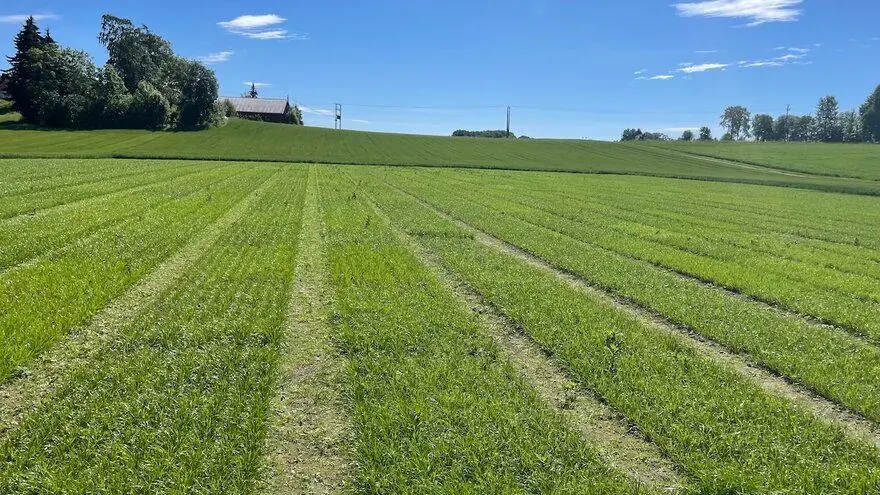
Rows of forage grass in a Norwegian field trial, photographed by Mallikarjuna Rao Kovi.
Forage trial plots
DLT-FarmingÅs and Hamar

Perennial ryegrass field trials

Low
Medium
High

Forty cultivars at each nitrogen level

Field photograph from ProteinSense, by M. R. Kovi. Portrait: Håkon Sparre, NMBU.

Research interests

I use field trials, genomics and root transcriptomics to study yield and winter survival in timothy and perennial ryegrass. I also investigate late blight resistance in potato and how cereal varieties respond to nitrogen fertiliser.

Nitrogen use in perennial ryegrass

In Ås and Hamar, we compare forage yield at three nitrogen levels. We then grow contrasting ryegrasses in hydroponics and use single-nucleus sequencing to identify the root cells that express nitrate transporters.

We want to know which cultivars yield more at the same fertiliser rate, and which retain their yield when the rate falls.

Browse the ryegrass root atlas
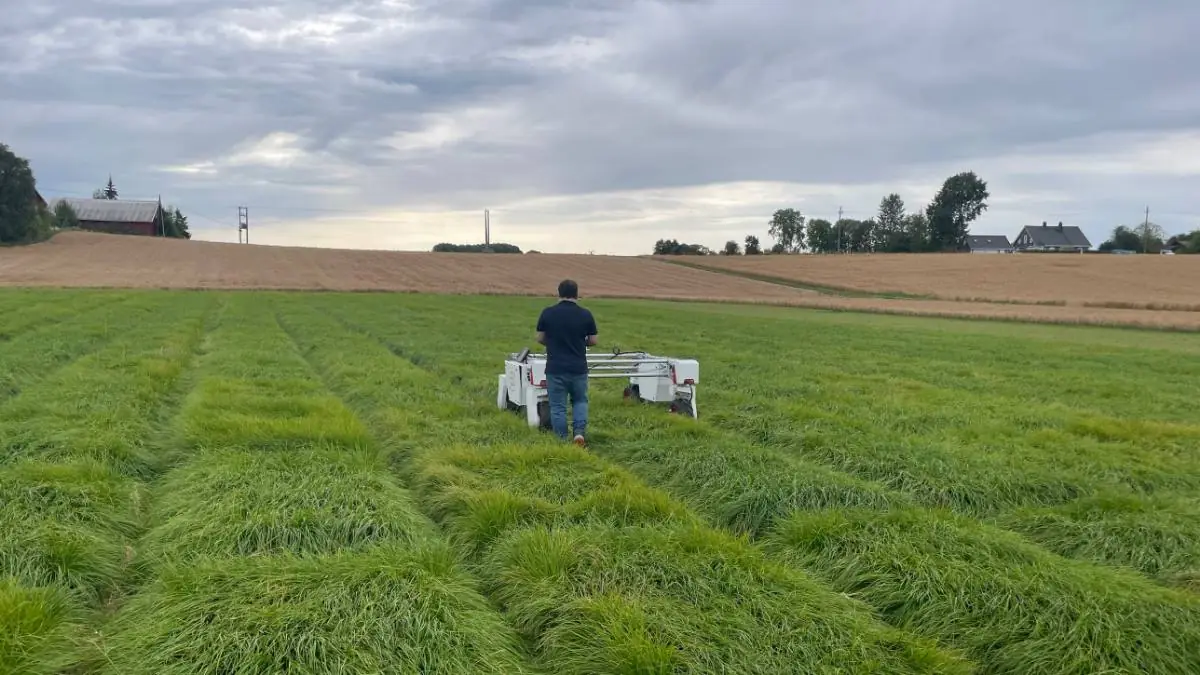
A researcher using a field phenotyping platform in forage plots at NMBU.
Forage trial plots in Ås
40cultivars
3nitrogen levels
2field sites
Potato disease resistance and nitrogen use in cereals

In GE-Sustain, I lead the work to identify potato genes associated with late blight resistance and tuber quality for processing. One trait we study is the amount of asparagine in the tuber.

In TWIN-NUE, we use repeated 3D scans to compare the growth of oat and perennial ryegrass at different nitrogen levels. I am extending this work to barley to find out which varieties yield more at the same nitrogen rate or maintain yield when the rate is reduced.

Project roles

GE-Sustain
Potato gene discovery, work package leader
TWIN-NUE
Nitrogen use in oat and ryegrass, project leader

Testing genomic predictions in new families

With Graminor, we compared nine genomic prediction models in timothy and tested them in 213 independent families. Mean predictive correlation fell from 0.62 in cross-validation to 0.16 in the independent families.

For a breeder choosing parents, the second test is closer to the decision that matters.

Read the timothy study
Predictive correlation r
Within-training cross-validation
0.62
Independent families
0.16

Mean Pearson correlation across 30 trait and dataset combinations. Scale from 0 to 1.

Winter survival across seed generations

Seed of northern timothy cultivars is often multiplied farther south. We follow allele frequencies and gene expression across seed generations and test how plants recover from freezing and ice encasement.

The breeding question is whether a cultivar retains the winter hardiness it was selected for.

Read the winter stress study

Winter traits

Freezing tolerance
Regrowth after frost
Ice encasement
Survival under prolonged ice cover

Seed yield and genetic resources

In tetraploid red clover, we compared gene expression in plants with contrasting seed set. In meadow fescue, we developed a public genome database to help researchers locate genes and compare sequences.

Read the red clover study

Genomic resources

ForageGrassBase
Genome resources for meadow fescue

Research funding

Project and work package budgets as of November 2026.

≈45million NOK

Six projects I have led, one doctoral project and my work package in GE-Sustain.

External funding
≈34.5m
NMBU and PheNo
10.5m

External support comes from the Research Council of Norway, Norway’s agricultural research funds (FFL/JA) and industry.

Soil2Milk2026–2030 · Project leader 17.3 million NOK

We trace nitrogen from grass and clover fields through forage and dairy cows, measuring feed quality, nitrogen losses and methane emissions. The Research Council of Norway contributes NOK 16 million and industry partners contribute NOK 1.3 million. Partners include TINE, Graminor, Yara and the Norwegian Agricultural Extension Service.

Soil2Milk at NMBU
DLT-Farming2023–2027 · Project leader 12 million NOK

At Ås and Hamar, we compare 40 perennial ryegrass cultivars under three nitrogen regimes. Field robots, drones and sensors help us relate canopy measurements to dry matter yield and forage quality. The budget includes NOK 9.86 million in public funding and NOK 2.14 million from industry. Partners include Graminor, BioDrone and Accenture.

DLT-Farming at NMBU
TWIN-NUE2026–2029 · Project leader 5.5 million NOK

Daily 3D scans record how ryegrass and oat grow at different nitrogen levels. We combine those measurements with genomic data to model how individual genotypes respond to fertiliser. NMBU and the Norwegian Plant Phenotyping Infrastructure (PheNo) fund the project.

TWIN-NUE at NMBU
Ryegrass nitrogen genetics2026–2029 · Doctoral project lead 5 million NOK

This NMBU-funded doctoral project uses gene editing to test how candidate genes affect nitrogen uptake and use in perennial ryegrass.

Doctoral research at SustainPlant
GE-Sustain2024–2027 · Work package leader 3 million NOK

I lead gene discovery for potato disease resistance and processing quality. My work package has a budget of NOK 3 million within the NOK 16 million consortium led by Graminor.

GE-Sustain at SustainPlant
ProteinSenseFrom 2026 · Project leader 0.75 million NOK

With TINE, Yara and Graminor, we test whether drone images and field measurements can predict crude protein in grass and help farmers choose when to harvest. FFL/JA funds the work.

ProteinSense at NMBU
NitroGenEditStarted 2024 · Project leader · Completed 0.75 million NOK

In this FFL/JA pilot with Graminor, we screened ryegrass cultivars in hydroponics and selected genes for studies of nitrogen transport and metabolism.

NitroGenEdit at NMBU
N-VaktAwarded 2026 · Project leader 0.75 million NOK

With Agdir Drift AS, we will test whether satellite data can identify grassland with surplus nitrogen and a risk of leaching. FFL/JA awarded funding in 2026.

Norwegian Agriculture Agency award announcement

Research collaborations

Selected projects, research networks and co-authored papers. Each publication is mapped to a co-author’s institution at the time of publication.

Norway Brazil China Denmark Estonia Ethiopia Finland Italy Latvia Lithuania Sweden Switzerland United States
Documented collaborationSelected countryMap data: Natural Earth

Norway

Project partner

Graminor AS and TINE

Nitrogen use in forage and dairy production.

Soil2Milk
Linked papers (22)
  1. Growth under mild drought: transcriptomics comparison of perennial ryegrass genotypes with differential tolerance to water deficit
  2. Responses of sugar kelp to higher light intensity: growth, gene expression and content of iodine, bromine and vanadium
  3. Freezing and ice encasement tolerance of Arctic timothy varieties after seed multiplication for one, two or three generations at lower latitudes
  4. Genomic selection in timothy (Phleum pratense L.): a comprehensive evaluation of prediction models, multi-trait strategies, and forward validation across Norwegian environments
  5. Surviving under ice: gene expression changes during ice encasement in timothy (Phleum pratense L.) overlap with freezing and hypoxia stress responses
  6. Expression patterns of photoperiod and temperature regulated heading date genes in Oryza sativa
  7. Allele frequency and gene expression differences under key winter stresses in temporal populations of two timothy cultivars
  8. Limited genetic diversity found among genotypes of the Entada landrace (Ensete ventricosum (Welw.) Cheesman) from Ethiopia
  9. ForageGrassBase
  10. Frost survival and gene expression in timothy (Phleum pratense L.) cultivars as affected by age and selection in diverse field environments
  11. Development of an IoT sensor-based system for soil monitoring: conceptual design and experiments
  12. "People gathered by sorghum": cultural practices and sorghum diversity in northern Ethiopia
  13. Global transcriptome changes in perennial ryegrass during early infection by pink snow mould
  14. Transcriptome profiling reveals insight into the cold response of perennial ryegrass genotypes with contrasting freezing tolerance
  15. De novo and reference transcriptome assembly of transcripts expressed during flowering provide insight into seed setting in tetraploid red clover
  16. Seed yield of Norwegian and Swedish tetraploid red clover (Trifolium pratense L.) populations
  17. Freezing tolerance revisited: effects of variable temperatures on gene regulation in temperate grasses and legumes
  18. Genetic diversity, population structure and selection signatures in enset (Ensete ventricosum (Welw.) Cheesman), an underutilized and key food security crop in Ethiopia
  19. Candida utilis yeast as a functional protein source for Atlantic salmon (Salmo salar L.): local intestinal tissue and plasma proteome responses
  20. Grass and legume breeding matching the future needs of European grassland farming
  21. Population structure, genetic variation, and linkage disequilibrium in perennial ryegrass populations divergently selected for freezing tolerance
  22. Improving abiotic stress tolerance of forage grasses: prospects of using genome editing

Brazil

Project partner

Embrapa

Brazilian research partner in a Norwegian-led study of nitrogen use in forage and dairy systems.

Soil2Milk

China

Co-authored paper · 2015

Yong Hu, Xufeng Bai and Yongzhong Xing

Huazhong Agricultural University, Wuhan.

QTL mapping for thermo-sensitive heading date in rice
Linked papers (7)
  1. QTL mapping for thermo-sensitive heading date in rice
  2. Expression patterns of photoperiod and temperature regulated heading date genes in Oryza sativa
  3. Impact of seasonal changes on spikelets per panicle, panicle length and plant height in rice (Oryza sativa L.)
  4. Quantitative trait loci for rice yield-related traits using recombinant inbred lines derived from two diverse cultivars
  5. Candidacy of a chitin-inducible gibberellin-responsive gene for a major locus affecting plant height in rice that is closely linked to Green Revolution gene sd1
  6. Mapping and validation of quantitative trait loci for spikelets per panicle and 1,000-grain weight in rice (Oryza sativa L.)
  7. Genetic dissection of rice grain shape using a recombinant inbred line population derived from two contrasting parents and fine mapping a pleiotropic quantitative trait locus qGL7

Denmark

Project partner

Aarhus University

Genomic selection for timothy yield and forage quality in the Graminor breeding programme.

GenSelTim

Co-authored paper · 2016

Torben Asp

Aarhus University, Slagelse.

Global transcriptome changes in perennial ryegrass during early infection by pink snow mould
Linked papers (2)
  1. Global transcriptome changes in perennial ryegrass during early infection by pink snow mould
  2. Population structure, genetic variation, and linkage disequilibrium in perennial ryegrass populations divergently selected for freezing tolerance

Estonia

Project partner

Tallinn University of Technology

A Baltic and Norwegian project on frost and drought tolerance in perennial ryegrass.

EditGrass4Food

Co-authored paper · 2023

Cecilia Sarmiento

Tallinn University of Technology, Tallinn.

Improving abiotic stress tolerance of forage grasses: prospects of using genome editing
Linked papers (3)
  1. Growth under mild drought: transcriptomics comparison of perennial ryegrass genotypes with differential tolerance to water deficit
  2. Transcriptome profiling reveals insight into the cold response of perennial ryegrass genotypes with contrasting freezing tolerance
  3. Improving abiotic stress tolerance of forage grasses: prospects of using genome editing

Ethiopia

Co-authored paper · 2024

Alye Tefera Haile and Bizuayehu Tesfaye

Hawassa University, Hawassa.

Limited genetic diversity found among genotypes of the Entada landrace (Ensete ventricosum (Welw.) Cheesman) from Ethiopia
Linked papers (3)
  1. Limited genetic diversity found among genotypes of the Entada landrace (Ensete ventricosum (Welw.) Cheesman) from Ethiopia
  2. "People gathered by sorghum": cultural practices and sorghum diversity in northern Ethiopia
  3. Genetic diversity, population structure and selection signatures in enset (Ensete ventricosum (Welw.) Cheesman), an underutilized and key food security crop in Ethiopia

Finland

Research network

University of Helsinki

The University of Helsinki coordinates NordPheno, the Nordic digital plant phenotyping network that includes NMBU.

NordPheno

Latvia

Project partner

University of Latvia

A Baltic and Norwegian project on frost and drought tolerance in perennial ryegrass.

EditGrass4Food

Co-authored paper · 2023

Nils Rostoks

University of Latvia, Riga.

Improving abiotic stress tolerance of forage grasses: prospects of using genome editing
Linked papers (3)
  1. Growth under mild drought: transcriptomics comparison of perennial ryegrass genotypes with differential tolerance to water deficit
  2. Transcriptome profiling reveals insight into the cold response of perennial ryegrass genotypes with contrasting freezing tolerance
  3. Improving abiotic stress tolerance of forage grasses: prospects of using genome editing

Lithuania

Project partner

Lithuanian Research Centre for Agriculture and Forestry

A Baltic and Norwegian project on frost and drought tolerance in perennial ryegrass.

EditGrass4Food

Co-authored paper · 2023

Kristina Jaškūnė

Lithuanian Research Centre for Agriculture and Forestry, Akademija.

Improving abiotic stress tolerance of forage grasses: prospects of using genome editing
Linked papers (3)
  1. Growth under mild drought: transcriptomics comparison of perennial ryegrass genotypes with differential tolerance to water deficit
  2. Transcriptome profiling reveals insight into the cold response of perennial ryegrass genotypes with contrasting freezing tolerance
  3. Improving abiotic stress tolerance of forage grasses: prospects of using genome editing

Sweden

Research network

Swedish University of Agricultural Sciences (SLU)

SLU and NMBU are members of the Nordic digital plant phenotyping network.

NordPheno
How the papers were mapped

The lists cover 28 peer-reviewed articles. A country is included when a co-author reports an institution there. A paper may appear under several countries. Projects and research networks are listed separately.

Teaching and supervision

In the field, students compare forage crops on the ground. In the genomics classroom, they analyse data from our trials and defend their interpretation.

Courses at NMBU

  • PJH212

    Forage and Seed Crop Production

    Course coordinator and lecturer, since 2026

    I coordinate the teaching and assessment, including field classes at Vollebekk. Students revise their reports after feedback and present their findings to the class.

  • BIN300

    Statistical Genomics

    Sequencing module lead, since 2015

    I teach RNA sequencing and variant analysis. In the practical, students work through a dataset from our research and explain what their results mean for the plant.

  • BIO321 / BIO421

    Population Genetics

    Co-teacher, 2024–2025

    I taught about half of this MSc and PhD course, using breeding populations to explain genetic drift, selection and effective population size.

Guest teaching and pedagogical training

My guest lectures at NMBU cover plant biotechnology (BIO244), gene function (BIO327) and phenotyping (BIO312). I also taught transcriptome analysis to PhD candidates at TalTech in Estonia and LAMMC in Lithuania through EditGrass4Food.

I completed NMBU’s course in master’s and doctoral supervision in 2023 (5 ECTS). In 2026–2027 I am studying university pedagogy at Østfold University College (10 ECTS).

Selected publications

Browse all publications
2026Journal article

Genomic selection in timothy

Nine models compared using Norwegian breeding material, with independent families used for validation.

Theoretical and Applied GeneticsFirst and corresponding author

Career and recognition

Appointments and education

  1. Since 2024

    R&D Scientist, Graminor AS

    A 20% appointment in Hamar, working on genomic prediction, pre-breeding and crop modelling in forage and cereal breeding programmes.

  2. Since 2023

    Founder and Group Leader, SustainPlant

    Department of Plant Sciences, NMBU.

  3. Since 2015

    Research Scientist, NMBU

    Population and quantitative genetics of outcrossing crops under Nordic growing conditions.

  4. 2011–2015

    Postdoctoral Researcher, NMBU

    The VARCLIM trials followed perennial forage crops at five Norwegian locations, from Ås to Alta.

  5. 2006–2011

    PhD, Huazhong Agricultural University

    Molecular Biology and Biochemistry, Wuhan, China. My thesis examined the genetic basis of yield components in rice.

Earlier degrees

2005. MSc in Biotechnology, Bangalore University, India.

2003. BSc in Microbiology, Biochemistry and Chemistry, Sri Venkateswara University, Tirupati, India.

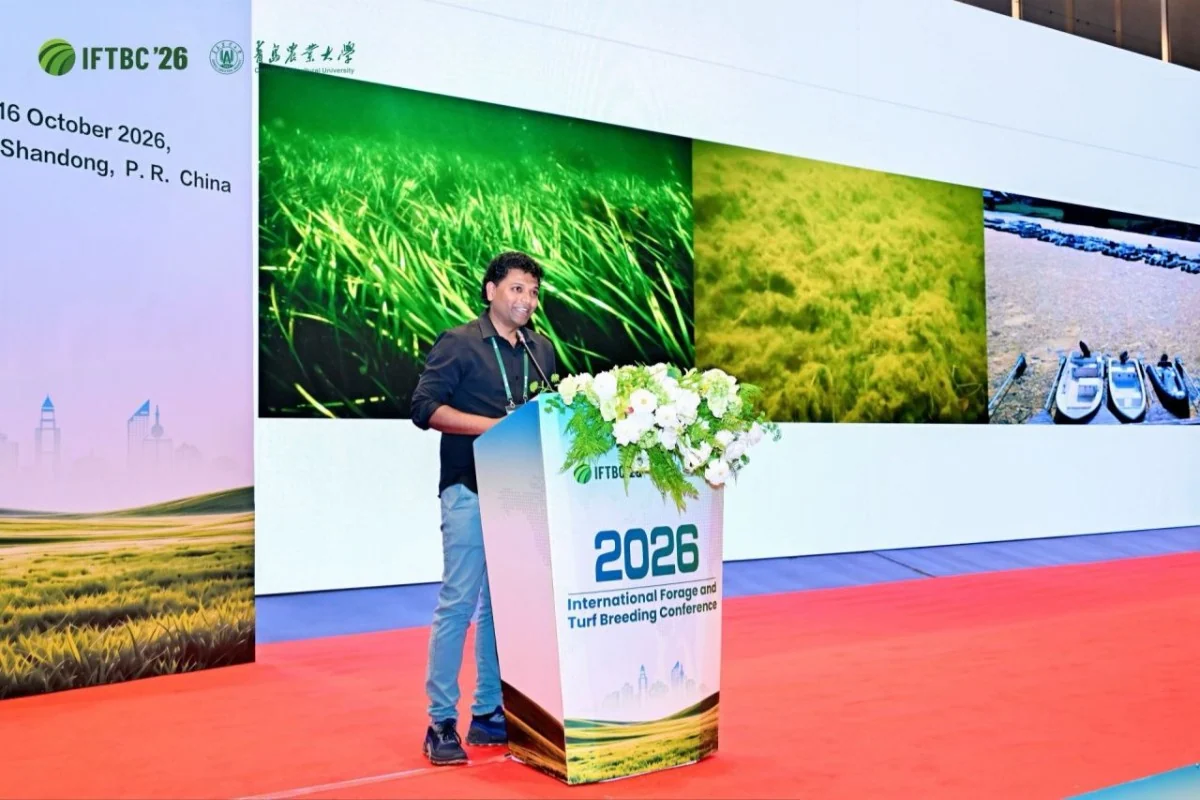
Mallikarjuna Rao Kovi speaking at the conference podium in Qingdao.
Presenting the ryegrass nitrogen research at the International Forage and Turf Breeding Conference in Qingdao, October 2026. Photograph from SustainPlant Group

Beat Boller Award

In 2025, EUCARPIA’s Fodder Crops and Amenity Grasses Section recognised my work in forage and turf breeding at its meeting in Aberystwyth, Wales.

Selected lectures and conference talks
  • Seeds of Resilience, Malmö, 2026. Invited lecture on nitrogen use efficiency in perennial ryegrass.
  • International Forage and Turf Breeding Conference, Qingdao, 2026. Oral presentation on nitrogen use efficiency in perennial ryegrass.
  • Genome Edited Plants seminar series, Ås, 2026. Demonstration of the ryegrass root atlas and the Lolium–Festuca pangenome browser.
  • EUCARPIA, Aberystwyth, 2025. Presentations on nitrogen use in ryegrass and climate-related variation in timothy yield.
Editorial work and academic service
  • Editorial Board member of Forage and Review Editor for the Plant Breeding section of Frontiers in Plant Science.
  • Deputy member of the Faculty Board (2025–2029) and Faculty Research Committee (since 2025), NMBU Faculty of Biosciences.
  • Proposal evaluator for Canada’s New Frontiers in Research Fund in 2026 and external examiner for master’s theses at Inland Norway University of Applied Sciences in 2023 and 2025.